Pressurized Hot Water in Standard Pipe
Why Pipeline Steel
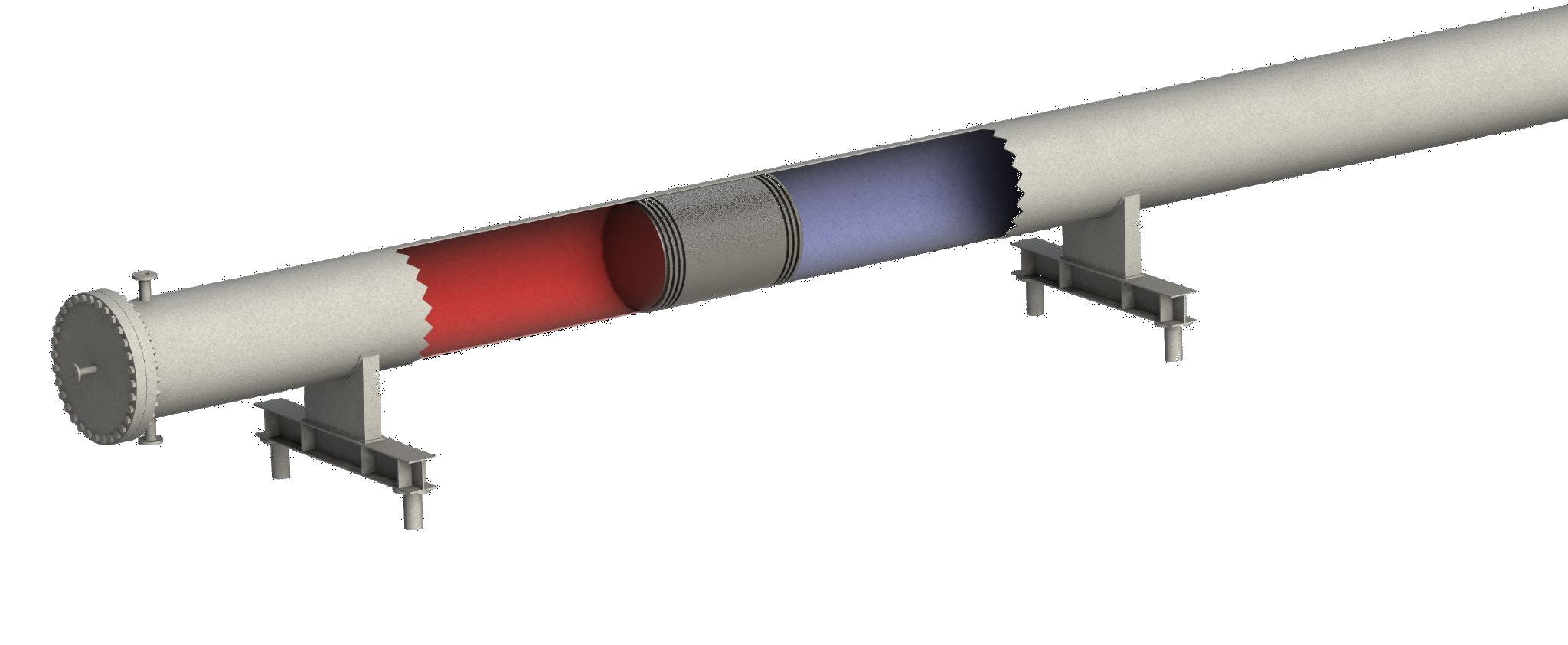
HeatTrap stores energy as pressurized hot water inside horizontal sections of API 5L line pipe. A patented traveling separator piston divides the hot and cold sections of each pipeline as the store charges and discharges.
API 5L is a specification your engineers can look up and your procurement team already buys against. It is made in volume on six continents, so a system can be sized to your load today and extended as you grow.
Why Water
Water has a higher specific heat capacity than the solid media and molten salts other systems store heat in, so a given mass holds more energy. It is available everywhere, it costs almost nothing, and it needs no supply chain of its own.
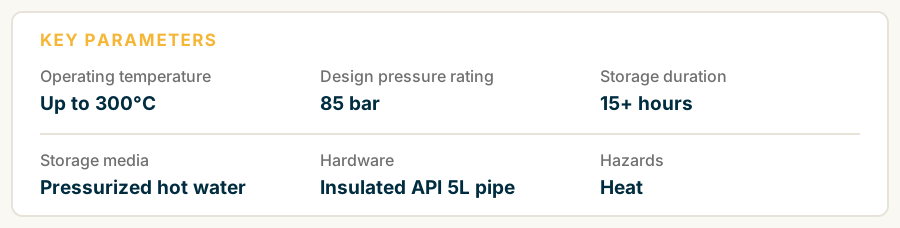
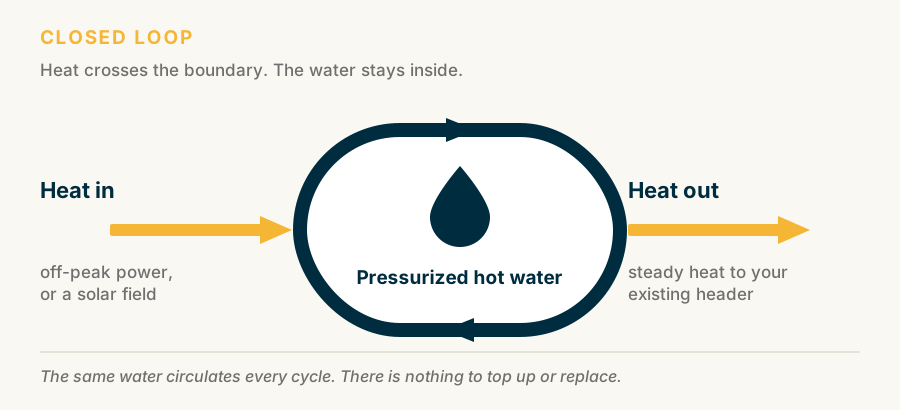
Water is also inert. It does not burn, it does not react, and it does not degrade with cycling. The only hazard in the system is heat. Our system runs in a closed loop, so the water is not consumed, and there is nothing to top up or replace.
Why 300°C
Some thermal storage systems run to 1,000°C and beyond. Reaching those temperatures takes materials chosen for the temperature rather than for cost, and that shows up in what the heat costs to deliver.
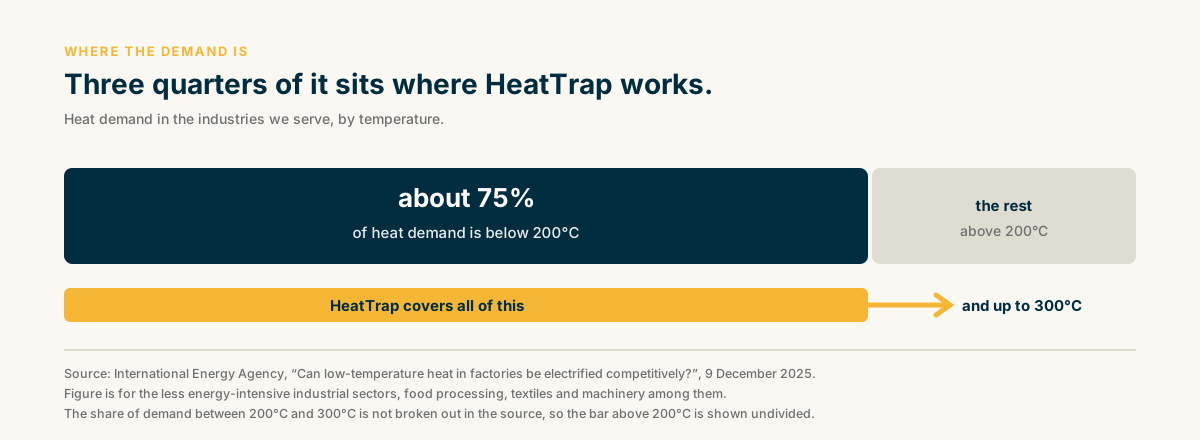
In the industries we serve, the IEA puts about 75% of heat demand below 200°C. HeatTrap is built for that band. Up to 300°C covers the hot water and steam that food and beverage processing, light manufacturing, and institutional plants actually run on, using standard steel and ordinary water.
How You Charge It
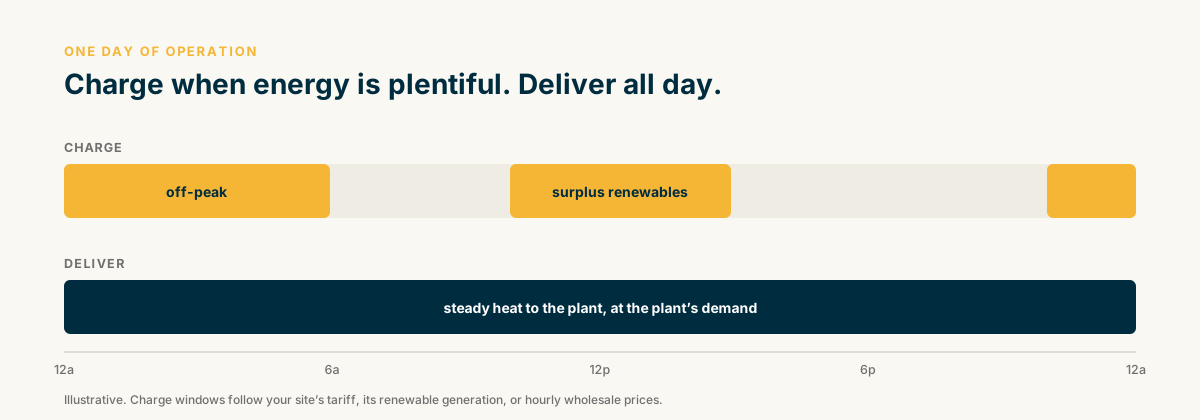
The fastest configuration to deploy needs no solar field at all. An electric boiler or heat pump charges HeatTrap on off-peak, overnight and surplus-renewable hours, and the store delivers steady heat to your existing header all day. The footprint fits beside the boiler house, so no additional land is required.
Where land and sun allow, concentrating solar collectors charge HeatTrap directly, which yields roughly four times more useful energy per acre than converting PV electricity into heat. Adding an Organic Rankine Cycle engine lets the same field deliver power as well. Either way the storage is identical, and your boilers can stay in place as full backup.
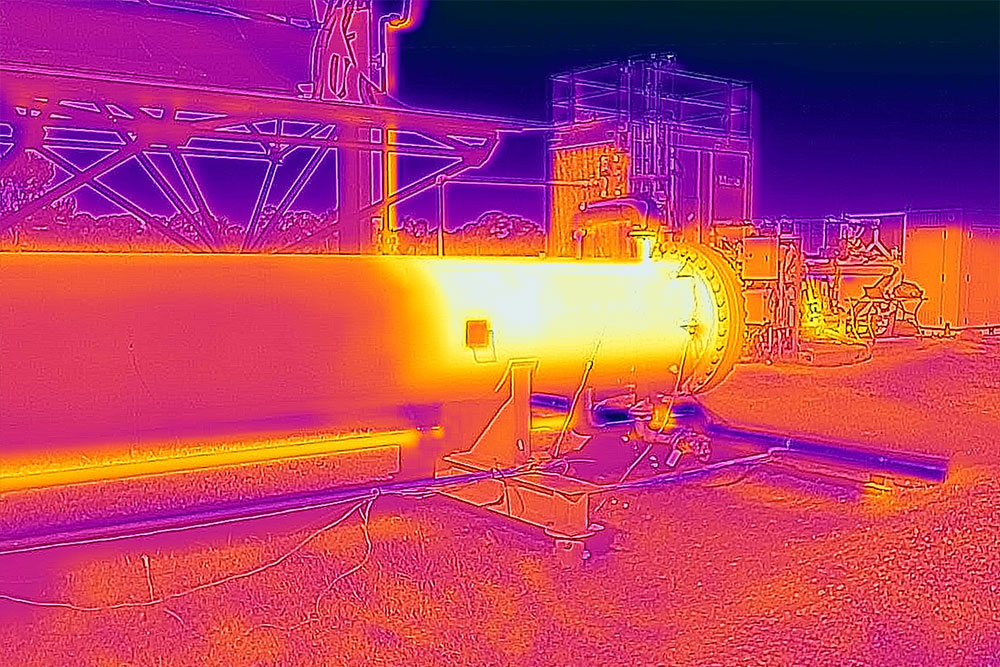
Proven in the Field: Crowley, Louisiana
You buy heat. We own everything else.
Let’s see whether this pencils at your plant. We would look at your fuel, your load, and your rate structure, and tell you honestly whether storage makes sense for your site.