If your plant runs on boiler heat, you already know the routine. The process calls for steam, the boiler fires, and the bill follows. You’ve likely tuned that system for efficiency already, and there are only so many levers left to pull.
But what if you could become your utility’s favorite customer by adding a new, flexible load?
Utilities and grid operators spend heavily to be ready for a few peak hours each year. In the PJM region, the latest capacity auction cleared at $333.44 per megawatt-day across its entire footprint, the cap approved by FERC, and that cost finds its way into what businesses pay. A load that shows up when the grid has room, and steps aside when it doesn’t, is the kind every utility would like more of. It’s a load that adds to their revenue base while avoiding the costly upgrades required by traditional, inflexible large loads.
Thermal storage can make your heat load that kind of load. Here are five ways that can pay off, and how to check what your utility offers.
How a heat load learns to flex
Think of thermal storage as a battery for heat. An electric boiler charges it in the hours when power is cheap and the grid has room to spare. The store is designed to hold that energy as heat and deliver it to your process whenever it’s called for.
Your process keeps its existing schedule. Your boiler runs on the cheap off-peak hours. The storage bridges the gap.
1. Electrify without adding to your peak
Moving heat to electricity adds load. What truly matters is when that load appears. An electric boiler that runs alongside your process would draw power during on-peak hours and could raise the demand charge you pay every month. With storage, the boiler can charge overnight and on weekends, tucked behind your existing peak, so your new load arrives without a new peak attached.
2. Stay out of your utility’s priciest hours
Some utilities price their worst hours to match. Take Green Mountain Power in Vermont. Its Critical Peak Rider for commercial and industrial customers on its time-of-use rate charges $0.54467 per kWh during critical peak hours, against $0.14739 for ordinary peak hours and $0.11494 off-peak, effective October 2026. GMP gives notice by 3 p.m. the day before, and critical peak hours are capped at 8 in a day and 150 in a year.
Those are hours you’d happily skip. Picture a two-shift plant on a hot July afternoon. The utility posts a critical peak for tomorrow, 3 to 7 p.m. Overnight, the electric boiler charges the store. Through the critical window the boiler stays off, the store carries the line, and the plant buys almost nothing at the critical price.
3. Put the grid you already have to work
Every utility builds its poles, wires, and substations for its busiest hours. A new load that charges in the quieter hours uses equipment that is already built and paid for. Researchers at Duke University’s Nicholas Institute estimated that the largest U.S. balancing areas could take on 76 to 126 GW of new load if that load stepped back for just 0.25% to 1% of the year, and that flexible loads can help reduce the need for large expenditures on new capacity.
That makes a flexible heat load an easy one for your utility to say yes to, and it can make the conversation about your electrical service an easier one too.
When we model a system, we look at your potential onsite generation and energy use to match a storage system that captures the value of that energy, including the rates and programs your utility offers. If you’d like to see how that could look for your site, a short conversation through our Contact Us form is a good place to start.
4. Buy power at the hour’s price
A few utilities now let storage sites buy energy the way the wholesale market prices it. Otter Tail Power’s Thermal Market Energy Pricing Rider in North Dakota, effective January 2026, lets eligible large customers using thermal storage pay market rates for energy on an hourly basis. With a store, you can fill up in the cheap hours and sit out the expensive ones.
5. Be ready when the grid calls
Some programs pay for flexibility directly. In Massachusetts, the 2025 materials for the commercial and industrial demand response program list $45 per kW for the summer for targeted events and $200 per kW for daily events, with events between 3 p.m. and 8 p.m. from June through September. In PJM, the latest capacity auction cleared 7,299 MW of demand response, up from 5,531 MW the year before.
These programs pay for cutting load below what you would normally use. They fit best where some of your heat runs straight off the electric boiler during the day, or where you charge from midday power. Storage lets that load drop out on call while your process keeps its heat. If all your charging already happens overnight, the value shows up in the first four ways instead.
How to find out what your utility offers
Start with your bill. Find the name of your rate schedule, then pull your utility’s full tariff from its website and look for riders with names like critical peak, load response, curtailable, interruptible, or demand response. Your account representative can tell you which ones your site qualifies for, and in some states, like Massachusetts, the programs sit with an efficiency program administrator.
We can also do this legwork for you as part of a free site assessment, reading your tariff, the programs open to your site, and your load data side by side.
What enrolling usually involves
Programs differ in the details, and the details set the payment. These are the things we check with a site.
- Metering. Most programs need interval data, often in 15-minute readings, so your usage can be measured hour by hour.
- A baseline. Many programs pay against an estimate of what you would have used. The Massachusetts program uses the 10 most recent similar days.
- A minimum term. GMP’s rider, for example, asks customers to stay on it for at least 12 billing periods.
Where Durion’s HeatTrap fits
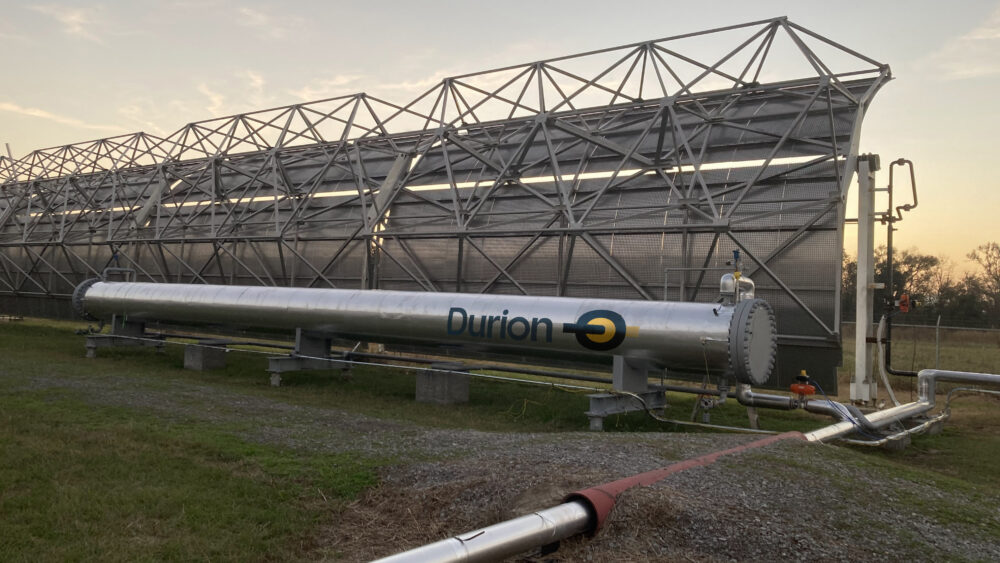
HeatTrap is Durion’s long-duration thermal storage. An electric boiler or heat pump charges it on off-peak, overnight and surplus-renewable hours, and it delivers steady heat to your existing header on your schedule. With 15 or more hours of storage, it can carry a process through a long peak window and still recharge overnight.
Related: Technology page
Signs your heat load could be a good fit
Flexibility tends to be worth a closer look when a few of these sound like you:
- Your site has a heat load of 500 kW or more, running on multiple shifts or around the clock.
- You are planning to electrify some or all of your process heat.
- Your utility has a time-of-use, critical peak, or demand response option, or your site is in a capacity market.
- You can get interval data from your utility or your own meter.
None of these is a requirement on its own. Together, they suggest your boiler house could be worth more to the grid than it is today.
Frequently asked question
Doesn’t an electric boiler add load to the grid? It does. With storage, that new load runs in the hours when the grid has room, and stays out of the peak hours that drive costs for you and your utility.
Start the conversation
Your boiler house already keeps production running. With storage, it can also become the kind of load your utility is glad to serve: new electric heat that fills the quiet hours, stays clear of the peak, and puts existing poles and wires to better use. You can get a heat cost you can plan around and more ways to earn from your flexibility. Your utility gets more out of the grid it has already built.
The first step is a look at your own numbers. With your rate schedule, a year of bills, and a picture of your heat load, we can show you which rates and programs fit your site, how a storage system could be sized around them, and what it could mean for your energy costs. The site assessment is free, there’s no obligation, and you’ll come away with a clear view of your options either way.
Reach out through our Contact Us form, and let’s find out what your boiler house could be worth.
Sources
- “PJM Auction Procures 134,479 MW of Generation Resources” (2027/2028 Base Residual Auction results). PJM Interconnection, December 17, 2025. https://www.pjm.com/-/media/DotCom/about-pjm/newsroom/2025-releases/20251217-pjm-auction-procures-134479-mw-of-generation-resources.pdf
- “Critical Peak Rider 63/65.” Green Mountain Power, Tariff V.P.U.C. 10, effective with bills rendered on or after October 1, 2026. https://gmpsnapshot.greenmountainpower.com/wp-content/uploads/2026/01/Critical-Peak-Rider-Oct-1-2026.pdf
- “Rethinking Load Growth: Assessing the Potential for Integration of Large Flexible Loads in US Power Systems.” Nicholas Institute for Energy, Environment & Sustainability, Duke University, February 11, 2025. https://nicholasinstitute.duke.edu/sites/default/files/publications/rethinking-load-growth.pdf
- “Existing US grid can handle ‘significant’ new flexible load: report.” Ethan Howland, Utility Dive, February 11, 2025. https://www.utilitydive.com/news/us-grid-headroom-flexible-load-data-center-ai-ev-duke-report/739767/
- “Thermal Market Energy Pricing Rider” (ND TMEP). Otter Tail Power Company, North Dakota, effective January 1, 2026. https://www.otpco.com/media/0gze4lqf/2026jan_tmep_nd.pdf
- “Commercial and Industrial Demand Response Program Materials.” Massachusetts Electric Program Administrators (Cape Light Compact, Eversource, National Grid, Unitil), April 14, 2025. https://www.capelightcompact.org/wp-content/uploads/2025/05/CI-DR-Program-Materials-April-2025.pdf